
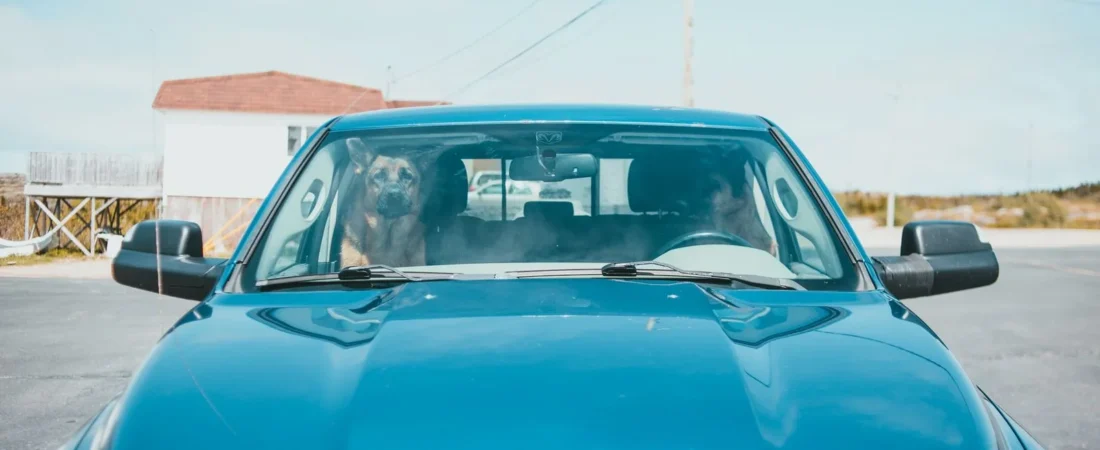
Getting a big dog into an SUV sounds simple until your 80-pound Labrador refuses to jump, or you watch a senior dog struggle to haul themselves onto a back seat that’s 26 inches off the ground. The problem isn’t the dog. It’s that most SUVs weren’t designed with dogs in mind — and repeated jumping and hauling puts real stress on hips, elbows, and spinal joints over time.
Here’s how to get a big dog into an SUV without hurting their joints — and without throwing out your own back in the process.
Why Joint Health Matters More Than You Think
Large breeds carry more weight per joint than smaller dogs, and they’re statistically more prone to hip dysplasia, elbow dysplasia, and early-onset arthritis. Vets increasingly flag repetitive high-impact jumping as a contributing factor — especially when dogs are young and still developing, or when they’re older and already showing signs of stiffness.
A dog that jumps into a lifted SUV hundreds of times over their lifetime accumulates real wear on those joints. The fix doesn’t have to be expensive or complicated.
Option 1: Use a Dog Car Ramp (Best for Most Dogs)
A ramp gives your dog a gradual incline instead of a vertical jump. For dogs over 50 pounds, or any dog showing signs of joint stiffness, a ramp is the single most effective change you can make.
What to look for in a ramp:
- Length matters more than angle. A longer ramp means a gentler slope. For a standard SUV with a 24–28 inch cargo height, you want a ramp at least 62 inches long. Shorter ramps create steep angles that defeat the purpose.
- Weight capacity. Make sure the ramp is rated well above your dog’s weight. A 90-pound dog on a ramp rated for 100 pounds is cutting it close.
- Non-slip surface. Grip is everything. A dog that slips on a ramp once will never trust it again. Look for rubberized or high-traction fabric surfaces.
- Stability. The ramp should lock firmly against the car at the top and not flex or bounce under the dog’s weight.
Training a dog to use a ramp takes 3–8 minutes with treats and patience. Most dogs take to it quickly once they realize it’s easier than jumping.
→ Our 71″ foldable ramp is rated for 200 lbs and designed specifically for full-size SUVs and trucks.
Option 2: Use a Step Stool
Steps are a middle-ground option — they reduce the height of the single jump but don’t eliminate it. They work well for dogs that are reluctant to use a ramp but struggle with a full jump. Look for steps with a wide, stable base and non-slip treads.
Steps are better suited to access doors (rear passenger doors) than cargo areas. For rear cargo loading, a ramp almost always works better.
Option 3: Lift Assist (for Dogs That Can’t Ramp)
Some dogs — post-surgery, very elderly, or with severe hip dysplasia — can’t manage even a gentle ramp without pain. In these cases, you may need to assist with a lift harness or lift them manually.
For manual lifts:
- Place one arm under the chest, one under the hindquarters.
- Lift smoothly without twisting — use your legs, not your back.
- Keep the dog’s spine level during the lift.
Lift harnesses with a handle over the dog’s back (like a “Help ‘Em Up” style harness) let you provide gentle upward support while the dog walks up a ramp on their own — a good combination for dogs with significant mobility challenges.
Teaching a Reluctant Dog to Use a Ramp
Most large dogs will resist a ramp the first time. Here’s a reliable training sequence:
- Place the ramp flat on the ground. Let the dog walk across it at ground level. Reward with high-value treats.
- Prop one end up about 6 inches. Lure the dog across with treats. Keep sessions short (2–3 minutes).
- Gradually increase the incline over 2–3 days until it’s at full car height.
- Finally, practice with the ramp against the actual car.
Never force or rush a dog up a ramp. Pressure creates negative associations that are hard to undo.
Protect the Interior While You’re at It
Once your dog is loading smoothly, the next problem is what they do to the cargo area. Muddy paws, wet fur, and scratched bumpers are the typical result of a dog that’s enthusiastically using their new ramp.
A heavy-duty cargo liner protects the trunk floor and bumper lip from scratches. Combined with a ramp, it completes the system: easy entry, no damage, no mess.
→ Browse our full range of dog car gear for SUVs and trucks.
The Bottom Line
For most large dogs, a quality ramp eliminates both the joint strain of high-impact jumping and the awkward logistics of lifting a 70+ pound animal. It takes a few days to train, costs less than a single vet visit, and pays off in joint health over the dog’s lifetime.
If your dog is already showing signs of stiffness — slower to rise, reluctant to jump, favoring a leg after exercise — talk to your vet. A ramp is usually part of the solution, but it shouldn’t replace a proper diagnosis.
Shop Dog Car Gear
The most effective way to get a large dog into an SUV safely: our 71″ Foldable Dog Car Ramp — 71 inches long, non-slip, holds 200 lbs. Gentle enough for senior and arthritic dogs. See the ramp →
🐾 Shop the ramps and stairs from this article
Dog Car Ramp 71″ — Extra-long foldable ramp for large breeds and senior dogs. Holds 200 lbs. $159.99
Dog Car Stairs — 5-Step Aluminum — Adjustable folding stairs for SUVs & trucks. Gentler on arthritic joints than a ramp. $129.99
View All Products →