
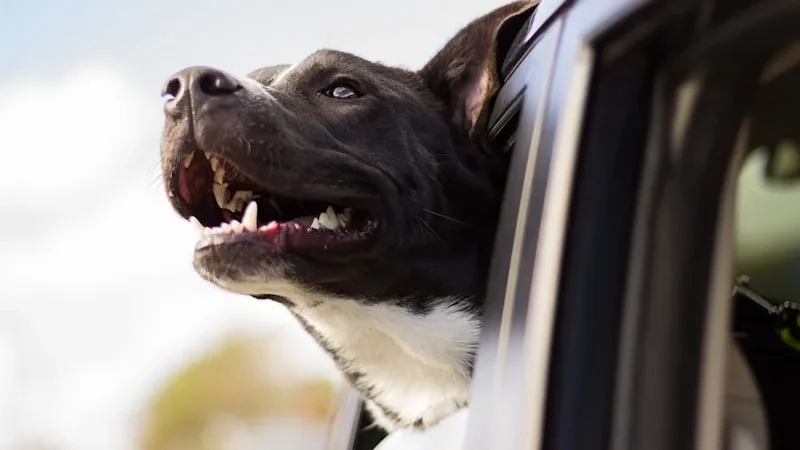
Choosing a dog car harness sounds simple — until you realize that most products on the market aren’t actually designed for crash situations. This guide covers what makes a harness genuinely safe, how to pick the right size, and which types work best for different dogs and vehicles.
Why Most Dog Car Harnesses Fail When It Matters
The problem isn’t that dog car harnesses don’t exist — it’s that the vast majority are walking harnesses sold with a car clip attached. A walking harness is engineered to distribute leash pull force. It is not engineered to hold a 50-pound dog during a sudden stop at highway speed.
In a 35 mph crash, an unrestrained 60-pound dog hits with roughly 2,700 pounds of force. A walking harness will often fail outright under that load — or transfer dangerous force directly to the dog’s spine. The difference between a crash-tested harness and a regular one isn’t marketing. It’s engineering.
The Center for Pet Safety (CPS) is the independent US organization that physically crash-tests dog restraints. When a harness carries CPS certification, it has been tested at 30 mph with a weighted dog form. That is the standard to look for.
The 3 Main Types of Dog Car Harness
1. Crash-Tested Harnesses (Back-Clip)
These attach to the vehicle seat belt via a short tether at the back of the harness. The back clip distributes crash forces across the dog’s chest and ribcage rather than the neck. These are the right choice for most dogs in the back seat.
Best for: medium to large dogs (20–100 lbs) riding in the back seat of any vehicle.
2. Dog Car Booster Seats with Integrated Harness
A raised, padded seat that hooks to the car’s seat belt or headrests, with a short internal tether for the dog. Elevates small dogs so they can see out the window, which reduces motion sickness and anxiety in many dogs.
Best for: small dogs under 20 lbs who get anxious or restless when they can’t see outside.
3. Crash-Tested Travel Crates
Hard-sided crates secured to the cargo area of an SUV or van with load anchors. Offer the highest protection in a severe collision, but require cargo space and a dog that’s comfortable in a crate.
Best for: large dogs in SUVs, dogs that are already crate-trained, or frequent long-distance travelers.
5 Things to Check Before You Buy
1. Crash-Test Certification
Look for harnesses with independent crash-test certification — not just “safety tested” or “approved” language from the manufacturer. The Center for Pet Safety (centerforpetsafety.org) publishes a list of certified products. If the harness isn’t on that list, treat the safety claims with skepticism.
2. Attachment Point: Back Clip, Not Chest Clip
Chest-clip harnesses redirect crash force toward the neck and throat. Back-clip harnesses spread the load across the spine and ribcage. For car use, always choose back-clip attachment.
3. Tether Length
The tether connecting the harness to the seat belt should be short enough that your dog cannot stand fully upright in the seat. If the tether is too long, it allows forward momentum to build before the harness catches — increasing the load the harness must absorb.
4. Adjustment Points
A harness that doesn’t fit properly won’t protect properly. Look for a minimum of three adjustment points: one around the neck, one around the chest (behind the front legs), and one connecting the two. The “two-finger rule” applies — you should be able to slide two fingers under the strap at any point, but not three.
5. Material Quality
Nylon webbing is standard and durable. Look for reinforced stitching at the D-ring where the tether attaches — this is the highest-stress point in a stop. Avoid harnesses where the D-ring is simply sewn into the fabric without a reinforcing bar tack or metal ring at the base.
Sizing Guide: Finding the Right Fit
Always measure before ordering. Breed alone is not a reliable guide — individual dogs vary enormously in chest girth even within the same breed.
| Dog Weight | Typical Size | Notes |
|---|---|---|
| Under 10 lbs | XS | Consider a booster seat for best security |
| 10–25 lbs | S | Measure chest girth — small breeds vary widely |
| 25–50 lbs | M | Most popular size range |
| 50–80 lbs | L | Verify back-clip compatibility at this weight |
| 80+ lbs | XL / XXL | Also consider a cargo barrier for SUV owners |
Measure your dog’s chest girth at the widest point of the rib cage (just behind the front legs) and neck circumference at the base. When in doubt between two sizes, size up — a snug fit is safer than a tight one.
Common Mistakes to Avoid
- Using a walking harness in the car. Not designed for crash loads. Can fail or cause spinal injury in a collision.
- Clipping the seat belt to a collar. Extremely dangerous — creates near-certain neck injury or strangulation risk in any significant impact.
- Buying on price alone. A $9 harness from a generic marketplace has not been crash-tested. For $40–70, a certified harness is a meaningful investment.
- Letting the tether be too long. A 24-inch tether gives your dog room to build up speed before the harness catches.
- Not replacing after an accident. A harness involved in a significant impact may have invisible fiber damage. Replace it.
What to Look for When Shopping
When comparing options, apply this checklist in order: crash-test certification first, back-clip attachment second, correct size third, tether length fourth. A harness that fails any of the first two criteria isn’t worth buying regardless of price or reviews.
Browse our selection of dog car safety gear — every restraint in our collection is chosen for vehicle-specific engineering, not repurposed from walking use. Fast 3–8 day US shipping on all orders.
The Bottom Line
The right dog car harness keeps your dog from distracting you while driving and protects them if the unthinkable happens. The wrong harness does neither.
Start with crash-test certification. Measure your dog. Choose back-clip attachment. Keep the tether short. Those four rules eliminate 90% of the bad options on the market.
Your dog rides with you everywhere. Make sure they’re buckled in correctly.
Shop Dog Car Gear
Looking for a simple, universal dog car restraint? Our Dog Car Seat Belt 2-Pack works with any harness and fits all vehicles — a clean, no-fuss solution. See the seat belt →
🐾 Shop the dog car harness from this guide
Tactical Dog Car Harness — No-pull reflective vest with metal buckles. Clips directly to your seatbelt.
Shop Now — $49.99Pair your harness with a compatible Dog Seat Belt (2-Pack) — designed specifically for dogs in transit.