
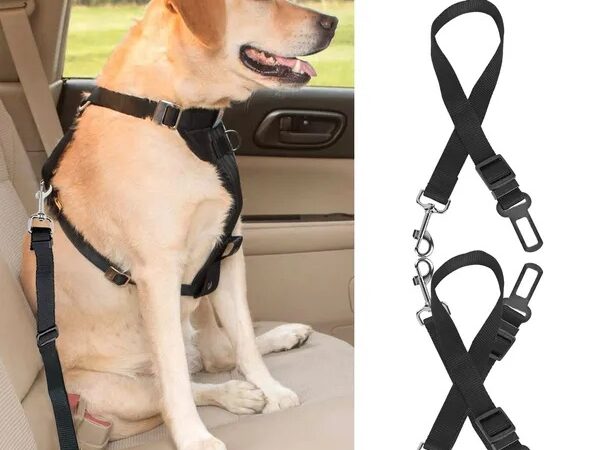
An unrestrained 50-pound dog in a 30 mph crash becomes a projectile generating over 1,500 pounds of force. That’s enough to seriously injure your dog, you, and anyone else in the car. Yet most people who drive with their dog every day have never thought about car safety the way they would for a child.
This guide covers everything you need to keep your dog safe in the car — from restraints and crash-tested gear to temperature dangers, anxiety, and the small habits that prevent accidents. Whether you do daily errands or cross-country road trips, this is the complete reference.
Why Dog Car Safety Matters More Than You Think
The risks of an unrestrained dog go beyond the obvious crash scenario:
- Projectile risk: in a sudden stop or collision, an unrestrained dog is thrown forward with massive force — into the windshield, the seats, or passengers.
- Driver distraction: a dog climbing into your lap or moving around the cabin is a leading cause of pet-related accidents.
- Escape risk: after a crash or at an open door, a frightened dog can bolt into traffic.
- Injury to the dog: even minor fender-benders can throw a dog hard enough to break bones.
The good news: nearly all of this is preventable with the right gear and habits.
The Three Ways to Restrain Your Dog Safely
There’s no single “best” option — it depends on your dog and vehicle. Here are the three legitimate methods, with their trade-offs.
1. Crash-Tested Harness + Seat Belt Tether
The most practical option for most dogs. A well-fitted harness connects to your car’s seatbelt system via a tether, keeping your dog secured to the back seat while still able to sit, stand, and lie down.
Critical rule: always attach the tether to a harness, never a collar. In a sudden stop, a collar attachment can cause severe neck injury. The harness spreads the force across the chest.
Best for: most dogs, daily use, road trips.
2. Dog Crate or Carrier
A properly secured, crash-tested crate is among the safest options — it contains the dog fully and prevents ejection. The downside is size: a crate for a large dog takes up significant cargo space.
Best for: dogs already crate-trained, larger vehicles, anxious dogs who feel safer enclosed.
3. Back Seat Barrier + Cover
A barrier keeps your dog in the back seat or cargo area, preventing them from climbing into the front and distracting you. Combined with a non-slip seat cover, it keeps your dog stable. Note: a barrier alone doesn’t restrain the dog in a crash — pair it with a harness for full protection.
Best for: reducing distraction, used alongside a harness.
Choosing the Right Gear: What Actually Matters
Whatever method you choose, prioritize these:
- Proper fit: a harness that’s too loose offers little protection. Measure your dog and follow sizing guides.
- Strong hardware: look for reinforced stitching and metal (not plastic) clips rated for your dog’s weight.
- Stability: a hard-bottom seat cover keeps your dog balanced instead of sliding around on every turn.
- Easy entry/exit: for large or senior dogs, a car ramp prevents jumping injuries getting in and out.
The Silent Danger: Temperature
Restraints aren’t the only safety issue. The “backseat greenhouse effect” is deadly: on a warm day, a car’s interior can rise 20°F in just 10 minutes, even with windows cracked. Within 30 minutes it can become lethal.
The rule is simple: never leave your dog alone in a parked car, even briefly, even in mild weather. On hot days, plan trips so your dog is never left waiting, and use sunshades and ventilation while driving.
Managing Car Anxiety and Motion Sickness
A stressed dog is a less safe passenger. If your dog whines, drools, paces, or gets sick in the car:
- Build positive associations: start with short trips to fun places, not just the vet.
- Give them stability: a secure harness and a non-slip surface reduce the anxiety of sliding around.
- Ventilation and breaks: fresh air and regular stops on long drives help with motion sickness.
- Consult your vet: for severe cases, there are safe anti-nausea and calming options.
Road Trip Safety Checklist
Heading out for a long journey? Cover these basics:
- Restraint fitted and tested (harness + tether, or secured crate)
- Water and a travel bowl
- Regular potty and stretch breaks (every 2–3 hours)
- ID tags and microchip up to date
- Seat protection to keep the cabin clean and your dog stable
- Never leave the dog alone in the parked car
For the full breakdown, see our Dog Road Trip Checklist.
Putting It All Together
Dog car safety comes down to three things: restrain properly (harness + tether is best for most), keep them stable and comfortable (non-slip cover, ramp for big or senior dogs), and manage the environment (never leave them in heat, reduce anxiety). Get these right and every drive — from the daily errand to the cross-country adventure — is safer for your dog and everyone in the car.
Build your dog’s safe travel setup: explore our complete collection of dog car gear →
Frequently Asked Questions
What’s the safest way to transport a dog in a car?
A crash-tested harness tethered to the seatbelt, or a secured crash-tested crate. Both prevent the dog from becoming a projectile. Always attach tethers to a harness, never a collar.
Is it legal to drive with an unrestrained dog?
Laws vary by region, but an increasing number of areas treat an unrestrained dog as a distracted-driving violation. Regardless of law, restraint dramatically improves safety.
Can my dog ride in the front seat?
It’s safest in the back seat. Front airbags deploy with force that can injure dogs, even restrained ones.
How do I stop my dog from sliding around in the car?
Use a hard-bottom, non-slip seat cover and a tether. This keeps your dog stable and calm during turns and braking.
How often should I stop on a road trip with my dog?
Every 2–3 hours for water, a potty break, and a short walk to stretch.
Shop Dog Car Gear
Ready to upgrade your dog’s car safety? Start with the basics: Dog Car Seat Belt 2-Pack to restrain, Hard Bottom Dog Seat Cover to protect seats, Waterproof Dog Cargo Liner for the trunk, and 71″ Foldable Dog Car Ramp to prevent joint damage loading and unloading. Shop all dog car gear →
🐾 Shop the full dog car protection bundle
The Complete Dog Car Protection Kit — Seat cover + cargo liner + safety tether bundled together. Save $29.98 vs buying separately.
Shop Now — $129.99The most popular protection combo: harness + the Hard Bottom Dog Car Seat Cover — designed specifically for dogs in transit.